Articles
Dates Calories: What You're Actually Eating Variety by Variety
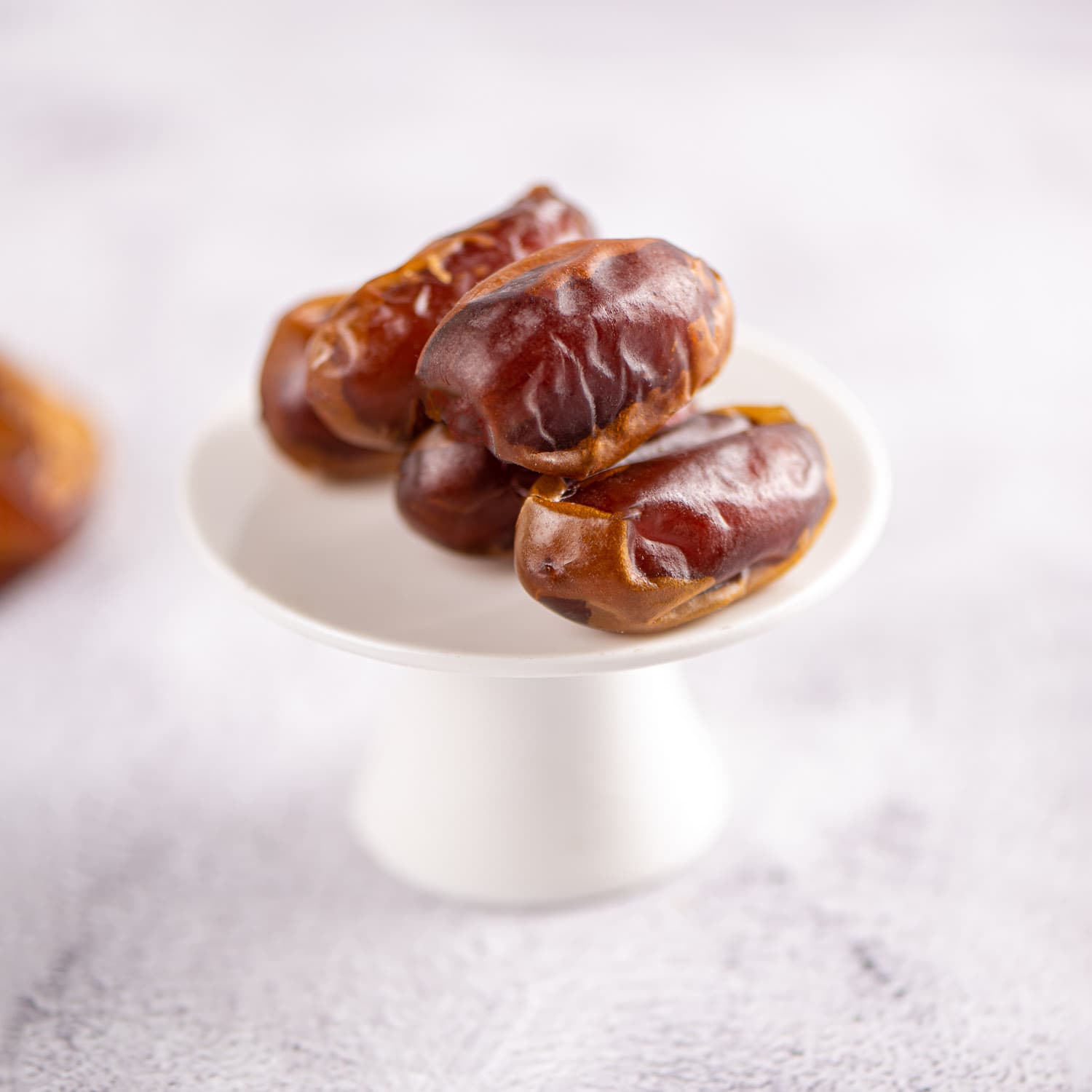
Dates get a suspicious look from calorie-counters, and it's understandable — they're sweet, dense, and easy to eat by the handful. But the numbers tell a more nuanced story than "dates are high in sugar, avoid them." The calories in a date vary by variety, by moisture content at harvest, and by how many you actually eat in one sitting. As growers who harvest Emirati dates directly from our farms in Al Ain, we can give you the specifics that generic nutrition sites miss.
The Baseline: How Many Calories Are in a Date?
A single large, soft date — the kind many supermarkets stock — weighs roughly 24 g and contains approximately 66–67 kcal, according to data reviewed by Healthline. That works out to around 277 kcal per 100 g of soft, fresh dates.
Smaller varieties dried to lower moisture sit closer to 280–290 kcal per 100 g. It sounds counterintuitive that drying raises the calorie density, but the logic is simple: water is removed, so sugars and fibre are more concentrated per gram.
A useful frame for UAE buyers:
- A standard serving at most Arabic coffee gatherings is 2–3 dates
- That puts you at roughly 130–200 kcal depending on variety and size
- Comparable to a small banana, or about a third of a typical chocolate bar
Khalas: The UAE's Signature Variety
Khalas (also spelled Kholas) is the crown jewel of Emirati date culture and one of the most nuanced varieties when it comes to calorie count. Cultivated in Al Ain's oases for generations, it is harvested from farms across the Arabian Peninsula with some of the finest crops coming from the Al Ain region.
At the rottab stage — the fresh, semi-soft state in which we harvest in July and August — Khalas dates retain more moisture and sit at the lower end of the calorie range, roughly 250–265 kcal per 100 g. By the time they reach full tamr (fully dried), that figure climbs toward 280 kcal per 100 g.
A medium Khalas date from our farms weighs approximately 8–12 g, putting a single fruit at around 22–33 kcal. For a closer look at our harvest, visit our Khalas Dates page.
Fard: Darker, Drier, Slightly Denser
Fard is the deep-brown, wrinkled variety you'll see piled high at Al Ain's date souq. It dries on the palm more completely than Khalas, which means lower moisture and a slightly higher calorie density — closer to 285–295 kcal per 100 g at the tamr stage.
Fard dates are smaller than Khalas. A single fruit typically weighs 6–9 g, so the per-date calorie count (17–26 kcal) is lower even if the per-100 g figure is higher. This is the kind of detail that gets lost when you search "dates calories" and land on a generic answer.
Fard is also notably high in dietary fibre relative to its size, which contributes to satiety. Fibre's role in digestive health and blood-sugar moderation is well documented — the Harvard T.H. Chan School of Public Health notes that adequate dietary fibre is linked to lower risk of cardiovascular disease and better glycaemic control.
Browse our full range of plain dates to see Fard alongside our other varieties.
Lulu: The Pale, Plump Underdog
Lulu is the lightest-coloured of the three major UAE varieties and the least well known outside the Emirates. It is harvested at the khalal stage (still yellow-amber) and eaten either fresh or gently dried.
Fresh Lulu dates have a crisp, apple-like texture and significantly higher water content — this pulls the calorie count down to around 220–240 kcal per 100 g when eaten at the khalal stage. As they ripen through rottab and into tamr, the figure rises toward 270 kcal per 100 g.
For anyone tracking calories carefully, eating Lulu dates fresh in season (typically August–September in Al Ain) is one of the lowest-calorie ways to enjoy premium Emirati dates. The season is short, which is precisely why we source and stock them carefully.
Why Moisture Stage Changes Everything
If there is one thing our growers want customers to understand, it is this: the ripeness stage at harvest determines calorie density far more than the variety label alone.
Dates pass through four stages:
- Kimri — hard, green, very high moisture, rarely eaten
- Khalal — firm, coloured (yellow to red), around 60–70% moisture, lower calorie density
- Rottab — soft, semi-ripe, around 30–45% moisture, mid-range calories
- Tamr — fully ripe or dried, around 15–25% moisture, highest calorie density per gram
Most commercially packaged dates sold in UAE supermarkets are at the tamr stage because it extends shelf life. Our premium selections include rottab-stage dates during peak season — worth noting if you are comparing calorie counts between products, as you may genuinely be comparing different ripeness stages, not just different brands.
Chocolate-Dipped and Stuffed Dates: Calories With Context
A question we're asked often in our Abu Dhabi boutique: how many calories are in a chocolate date?
Our chocolate-dipped dates are enrobed in single-origin chocolate — not compound coating. A single stuffed-and-dipped date weighs approximately 20–30 g and carries roughly 90–120 kcal, depending on the filling (nut paste, whole pistachio, orange peel).
For context, that is comparable to a standard biscuit or a small square of premium chocolate. The difference is that you also receive fibre, potassium, and natural sugars from the date itself — not just refined flour and additives.
Our stuffed dates without chocolate coating run lower: 50–80 kcal per piece depending on filling, primarily because the date-to-filling ratio shifts.
Dates and Blood Sugar: What the Research Actually Says
One of the most persistent myths about dates is that their sweetness makes them unsuitable for people managing blood sugar. The reality is more considered.
A study published in Nutrition Journal assessed the glycaemic index of five date varieties and found that all had a low-to-medium GI despite their high natural sugar content, attributing this partly to the fibre matrix within the fruit slowing glucose absorption (PubMed).
The Cleveland Clinic notes that dates are a low glycaemic index food, with a GI of around 42, which can help keep blood sugar steady. As with any sweet food, portion size still matters.
Three dates — the traditional Arabic hospitality serving — sit at around 150–180 kcal and provide roughly 4–5 g of dietary fibre. That fibre load, paired with the natural sugars, moderates the speed at which energy enters the bloodstream. It does not make dates a free food, but it does make them a more considered choice than a comparable portion of sweets or pastries.
A Practical Guide to Portion Sizes
Because variety and stage both affect the numbers, here is a practical per-serving guide based on our own farm production:
- 1 Khalas date (rottab, ~10 g): approximately 25–28 kcal
- 1 Fard date (tamr, ~7 g): approximately 20–22 kcal
- 1 Lulu date (khalal, ~12 g): approximately 26–29 kcal
- 3 dates (a typical serving with Arabic coffee): approximately 70–90 kcal for smaller varieties
- 1 chocolate-dipped stuffed date (~25 g): approximately 100–115 kcal
If you serve dates alongside Emirati Arabic coffee — as is traditional — the unsweetened gahwa itself adds essentially zero calories, making the pairing a genuinely light hospitality gesture compared to cake or biscuits.
Buying and Storing Dates to Preserve Their Nutritional Value
Calories are fixed by the fruit's composition, but nutritional quality can degrade with poor storage. Here is what we advise based on handling thousands of kilograms each season at our Al Ain farms:
- Rottab-stage dates (soft, high moisture) should be refrigerated and consumed within 2–3 weeks. They are at their finest — and lowest calorie density — when freshest.
- Tamr-stage dates keep well at room temperature for 3–6 months in an airtight container, away from direct sunlight.
- Do not freeze and thaw repeatedly — this damages the cell structure and causes the flesh to weep moisture, effectively changing the texture and concentrating surface sugars.
For gifting, our gift boxes are packed with the appropriate storage guidance included, so recipients know exactly how to keep their dates in peak condition.
The Bottom Line on Dates and Calories
Dates are calorically dense relative to their size — that much is true. But "dense" and "bad" are not synonyms. Compared with most sweet snacks, a small serving of quality Emirati dates delivers fibre, potassium, and natural sugars in a package that the body handles more gradually than refined confectionery.
The varieties matter. The stage matters. And where they come from matters too — a Khalas harvested at the rottab stage from an Al Ain farm and eaten within days of picking is a fundamentally different product from a dried, imported date that has been in a warehouse for six months.
If you would like to experience the difference firsthand, explore our Emirati dates — grown, sorted, and packed by the same family that is writing this post.
More from Articles
Articles
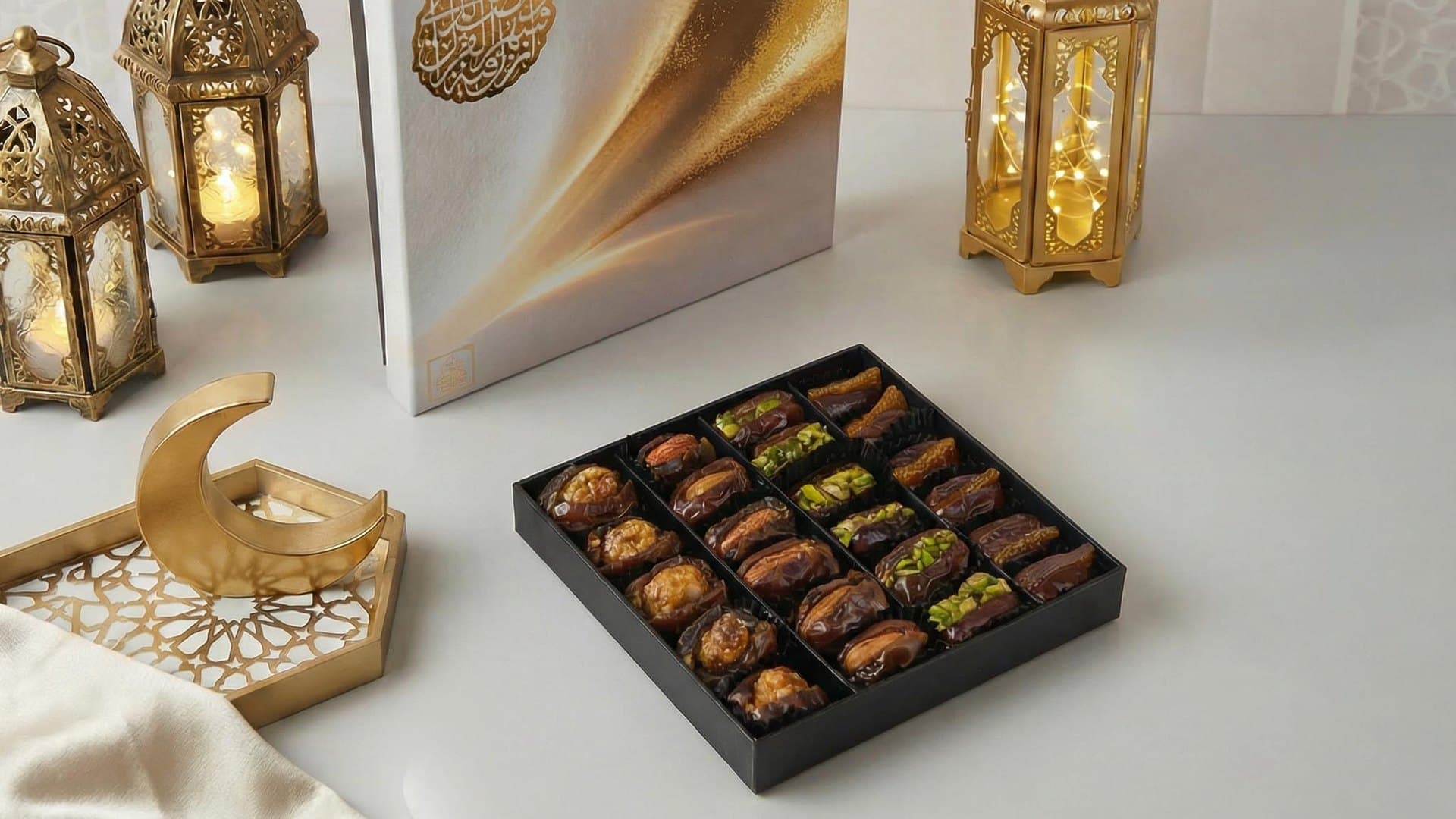
Ramadan Corporate Gifts UAE: A Procurement Playbook
November 8, 2026
A working playbook for HR, PAs and SME owners planning Ramadan corporate gifting in the UAE — what to send, to whom, in what tier, and by when.

Articles
UAE National Day Gifts: How to Celebrate 2 December with Dates & Emirati Tradition
August 17, 2026
2 December is more than a public holiday — it is the anniversary of a nation. Here is how to mark it with gifts that carry genuine Emirati meaning, from the palm groves of Al Ain to your table.
Articles
Lulu Dates: The Pearl of Al Ain's Palm Groves
August 10, 2026
Lulu dates are one of the UAE's most celebrated native varieties — pale gold, honey-sweet, and grown in the shadow of Jebel Hafeet. Here's everything you need to know about them.