Articles
From Al Ain's Oases: How UAE Date Farming Works
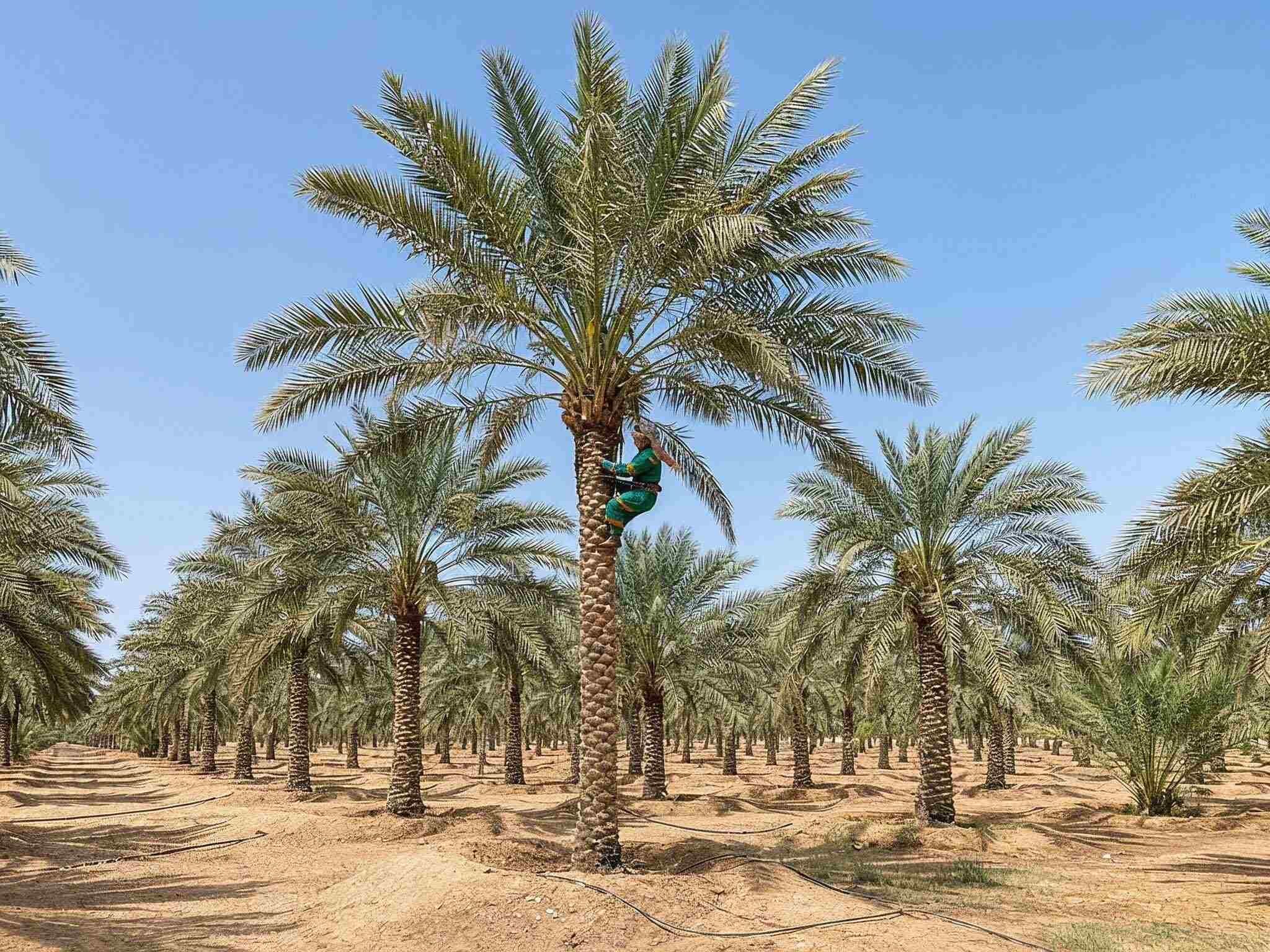
The date palm is the UAE's national tree, and nowhere is its cultivation older or more deeply embedded in the landscape than Al Ain. The oasis city's palm groves — a UNESCO World Heritage site — represent over 4,000 years of continuous date farming, and much of what makes an Emirati date distinctive begins with the specific conditions of soil, water, and climate that define this region.
The Al Ain Oasis and Why It Matters
Al Ain sits at the foothills of the Hajar mountains in Abu Dhabi Emirate, separated from the Omani city of Buraimi by little more than a border. The oasis — or more precisely, the network of six distinct oases that make up the Al Ain World Heritage property — is home to approximately 147,000 date palms, many of them varieties cultivated continuously since the Iron Age.
What makes Al Ain's soil distinctive is its combination of sand, silt, and mineral content washed down from the Hajar mountains, combined with access to underground water sources. The result is a growing environment that produces dates with exceptional sugar density and flavour complexity — including the Khalas variety, which is particularly associated with the Al Ain and Liwa regions.
The Falaj Irrigation System
The falaj (plural: aflaj) is an ancient underground channel system that directs groundwater from mountain aquifers to agricultural land. Dating back thousands of years across the Arabian Peninsula, the aflaj of Al Ain are listed as UNESCO Intangible Cultural Heritage precisely because they represent both an engineering achievement and a social system — the water channels are communally owned and managed, with strict rules about allocation and maintenance that have been observed continuously for millennia.
Today, the Al Ain aflaj continue to water date palms and vegetable plots alongside modern drip irrigation. Walking through the Al Ain oasis, you can see the channels flowing alongside the palm rows — a working piece of ancient infrastructure in a 21st-century city.
How the Harvest Works
Date palms are dioecious, meaning individual trees are either male or female. The female trees produce the fruit; the male trees produce pollen. Pollination in UAE date farms is done by hand — trained workers climb each female palm and manually transfer pollen from male flower clusters to female flower clusters, a process that must happen within the correct window in spring when the female flowers open.
After pollination, the date bunch develops over summer. Depending on the variety, the dates reach the tamr (harvest-ready) stage between August and November. Harvesting is also done by hand — workers climb the palms with safety harnesses and lower the date bunches to the ground, where they are sorted, graded, and packed.
The sorting process is where premium dates are separated from the rest: graders look at size, skin integrity, colour consistency, moisture content, and absence of damage. Only the top grades are packed as whole dates for retail and gifting.
Why Farm Provenance Matters
A date from a named Al Ain farm, harvested at the correct stage and graded properly, is a fundamentally different product from a date sourced anonymously through commodity channels. The variety is traceably authentic, the growing conditions are documented, and the flavour profile is consistent year over year.
That traceability is part of what premium UAE date specialists prioritise. Explore our farms and date sourcing page, or browse our full range of Emirati dates to see the varieties we source from heritage growing regions.
More from Articles
Articles
UAE National Day Gifts: How to Celebrate 2 December with Dates & Emirati Tradition
August 17, 2026
2 December is more than a public holiday — it is the anniversary of a nation. Here is how to mark it with gifts that carry genuine Emirati meaning, from the palm groves of Al Ain to your table.
Articles
Lulu Dates: The Pearl of Al Ain's Palm Groves
August 10, 2026
Lulu dates are one of the UAE's most celebrated native varieties — pale gold, honey-sweet, and grown in the shadow of Jebel Hafeet. Here's everything you need to know about them.
Articles
How to Choose the Perfect Ramadan Gift Box in the UAE
July 10, 2026
Choosing a Ramadan gift box in the UAE is about more than packaging — it's about what's inside and what it says. Here's how to get it right, from a family farm that's been growing dates in Al Ain for generations.