Seeds of Heritage
Date Palm Tree Care in the Gulf: Lessons From Our Growers
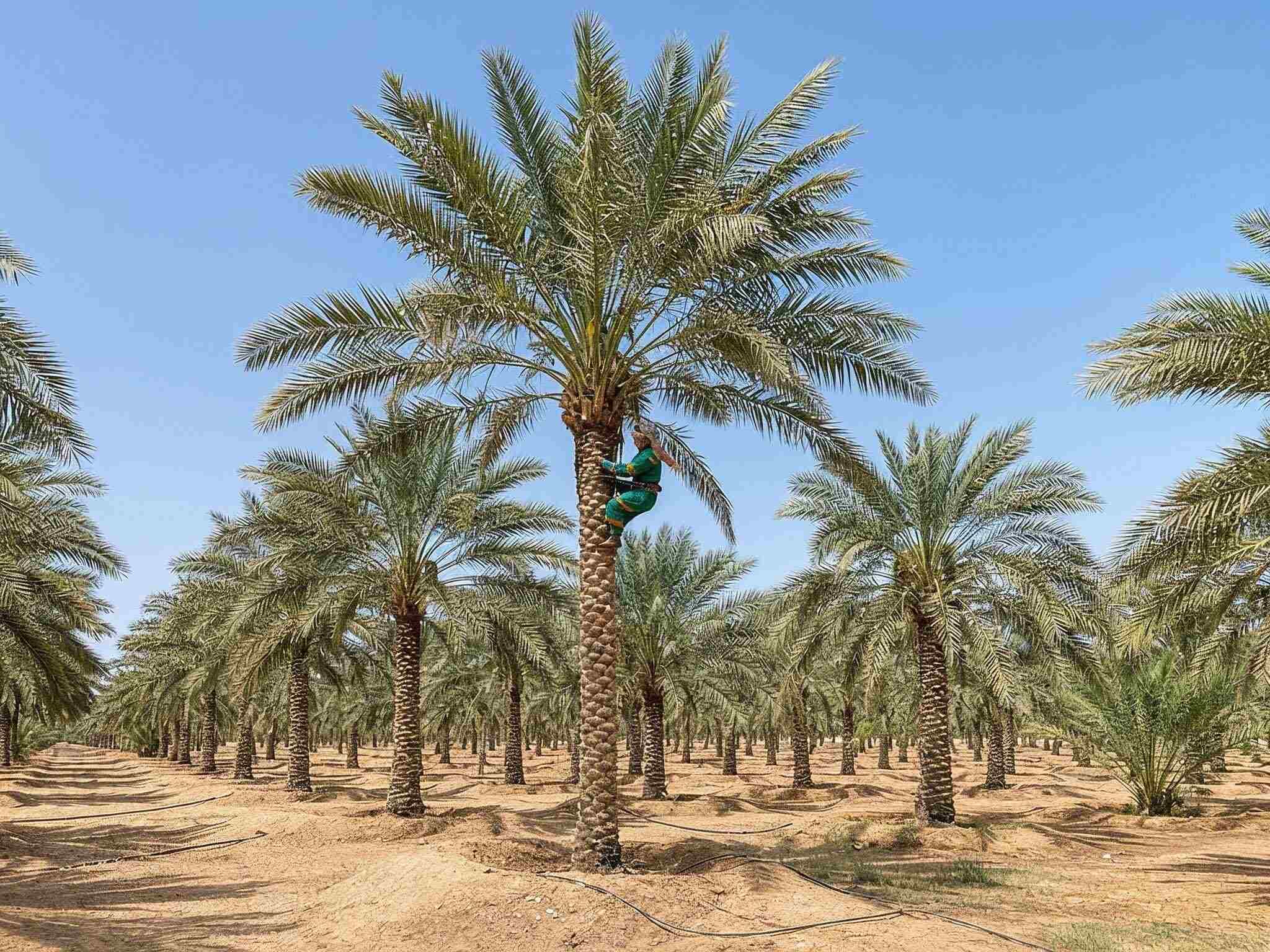
The date palm (Phoenix dactylifera) has been cultivated in the Gulf for over four thousand years — long enough for the relationship between the plant and its growers to develop a body of knowledge specific to this exact climate. Growing a date palm well in the UAE is not complicated, but it requires understanding the conditions that the palm evolved for, and providing them consistently.
Climate Requirements
The date palm is built for extremes: it tolerates summer temperatures above 50°C without stress, requires minimal water once established, and produces its best fruit under conditions that would kill most other productive trees — intense heat, low humidity, and alkaline soil.
What date palms cannot tolerate: frost (below -5°C causes serious damage), prolonged humidity during the ripening period (which causes the skin to crack and the date to ferment on the palm), and waterlogged soil. In UAE growing conditions, none of these are typically a problem. The climate is almost perfectly suited to the palm's requirements.
Watering
Young palms — up to three years old — require more frequent watering than established trees. In UAE summer conditions, daily watering for young palms is appropriate; in cooler months, every two to three days is sufficient. The key is deep watering rather than shallow surface irrigation: the palm's root system extends downward as well as outward, and frequent shallow watering encourages surface roots that are more vulnerable to heat stress.
Established palms are highly drought-tolerant but produce better fruit with consistent irrigation throughout the fruiting season. Traditional falaj irrigation — where available — delivers the slow, deep groundwater saturation that date palms evolved with. Drip irrigation is the modern equivalent for farms and home gardens.
Pollination
Date palms are dioecious — male and female flowers grow on separate trees. A female palm produces fruit only if its flowers are pollinated. In commercial farming, pollination is done manually: pollen from male flower clusters is harvested when the male inflorescence opens and either applied by hand directly to the female flowers or dusted over them with a brush.
Timing is critical. Female flowers are receptive for approximately two weeks after opening. Pollination that happens outside this window produces no fruit. Most UAE growers check their female palms daily during the pollination window (typically March to May depending on variety) and apply pollen within the first few days of the female flower opening.
Fertilisation
Date palms respond well to potassium-rich fertilisation, which supports fruit development and sugar accumulation. UAE growers typically apply a balanced fertiliser in February (before the growing season begins), with a potassium-heavy feed in June or July when the fruit is developing. Excess nitrogen in summer encourages vegetative growth at the expense of fruit quality — a common mistake in amateur date palm care.
Pests and Common Issues
The red palm weevil (Rhynchophorus ferrugineus) is the most significant pest affecting date palms in the UAE. Regular inspection of the crown (the growing tip) for entry holes, sap oozing, or a fermented smell is essential — infestation detected early can be managed; detected late, the palm may be irreparably damaged. UAE agricultural authorities maintain active monitoring programmes and provide guidance on treatment.
Our Seeds of Heritage programme provides UAE-grown date palm seedlings with care guidance specific to Gulf conditions. The programme gives you a living connection to the heritage of Emirati date farming — and everything you need to grow it successfully at home.
More from Seeds of Heritage
Seeds of Heritage
How to Safely Transport and Relocate Your Heritage Palm
September 8, 2025
One of the most unusual and rewarding aspects of owning a Seeds of Heritage seedling is that it is not just a plant—it is a palm tree. Unlike other...
Seeds of Heritage
Growing a Legacy: Date Palms as Heirloom Trees
September 8, 2025
When you think of a date palm, you probably imagine tall trees in gardens, farms, or lining desert roads. The idea of having one at home—in an apartment or a...
Seeds of Heritage
Essential Light and Temperature Guidelines for Young Palms
September 8, 2025
Light and temperature are the foundations of healthy growth for your Seeds of Heritage seedling. While mature date palms thrive in full desert sun, younger...